

Best Time of Year to Fly Fish the Truckee River (A Local Guide’s Season-by-Season Breakdown)
If you’re looking for the “best month” to fly fish the Truckee River, you’re asking a fair question — but the Truckee doesn’t really work like that.
This is a conditions river, not a calendar river.
I’ve guided on the Truckee for 21 years, and what I’ve learned is simple: the most important factors aren’t the date on the phone, they’re water temperature, flows, bug activity, and pressure. Get those things lined up and the Truckee can fish like a dream. Miss them and it can feel like the hardest river in the West.
Below is the honest season-by-season breakdown I give clients who want to plan a trip the smart way.
Winter (December–February): Low Pressure, Technical Fishing, and Real Giants
Winter Truckee fishing isn’t for everyone — and that’s exactly why it can be so good.
When the nights are long and the water is cold, the trout stop wasting energy. They don’t slide 10 feet to eat your fly. They feed in windows, they hold in very specific lies, and if your drift isn’t right, you’ll know it quickly. But if you slow down and do it correctly, winter is one of the best times of year to target your largest fish.
Pressure is typically the lowest all year. You can have entire runs to yourself that would be packed in July. That’s a big deal on a river where fish get educated. You won’t get “easy” eats, but you will get honest ones, and they’re often from better fish.
Water temperatures in winter are usually in the mid-30s to low 40s, depending on weather, flow, and sun exposure. That temp range doesn’t shut trout down — it just shortens the feeding windows. The best winter fishing is never at first light, but I do love mornings. It’s almost always mid-day once the sun has warmed the river just a bit.
Hatches in winter are subtle. You’re mostly fishing subsurface, and most of your bug life is made up of midges and small mayflies with some winter stones in the mix. Some days there will be very little surface activity even though fish are feeding. In winter, it’s common for all feeding to happen under the surface where you don’t see it.
Winter pros and cons are straightforward. The upside is low pressure and a real shot at a heavyweight. The downside is that it’s less forgiving — the Truckee demands better drifts in low, clear water, better depth control, and patience. Weather and access also become part of the equation: icy trails, deep snow, cold fingers, rapidly changing conditions and parking lots full of snow.
Winter is the season for anglers who don’t care about numbers. If a few quality fish make your day, winter can be incredible.
That said, the numbers “rule” isn’t set in stone. In over 20 years of guiding, some of our best numbers days of all time have been in the winter. But you need to put your time in for those days to happen.
Remember, “If you find one, you’ll find some. If you find some, you could find a ton!”.
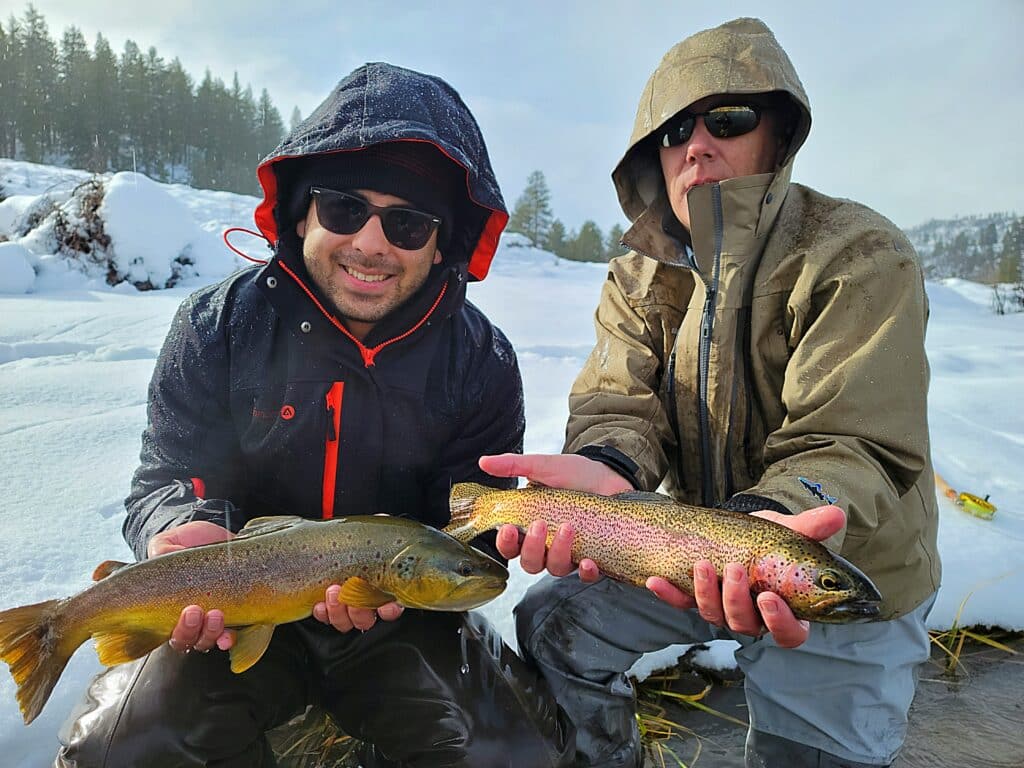
Occasionally size and numbers are the name of the game in winter!
Spring (March–May): The Best All-Around Season for Numbers and Quality
If I had to pick one season as the “most consistent” time to fly fish the Truckee River, it would be spring.
Spring is when the river wakes up. The days get longer, water temps climb, and trout behave like they’re supposed to. Fish move into predictable feeding lanes, feeding times become more consistent, and you start getting real windows where dry flies can matter.
Water temps are the biggest driver here. When the Truckee pushes into the low-to-mid 40s consistently, you feel the difference immediately. Trout feed longer each day. They move farther to eat. They make more mistakes. In other words, spring gives you the best chance at catching both numbers and quality. This is highly regulated by run-off conditions and may change a bit from year to year.
As ski season slows, fishing pressure picks up in early spring, then builds as you approach summer. But compared to July and August, spring still feels quieter, and the river usually fishes less “picked over.”
Spring hatches are where the river starts getting more fun. You’ll see increasing caddis, stoneflies, and mayfly activity, and some days you’ll have those classic spring afternoons where fish get greedy and you can put together a complete day.
By far one of my favorite hatches of the year is in the spring, the Skwala Stonefly. Fish are eagerly awaiting the first sizable bugs in months, usually in 10’s and 12’s. Many times, they hatch when the water has a bit of color, and big browns will let their guard down to smash a dry.
The one downside to spring is that it’s the most variable season. Runoff can blow things out fast. One week you’re having a top-tier dry fly session, the next week the river is high, cold, and moving like a freight train. Spring fishing is fantastic — but it requires you to stay flexible and fish the conditions you have, not the conditions you want.
With mother nature in charge, it’s hard to say when peak runoff will be. But on average, it’s much of April and May.
For trip planning, spring can be hard to beat. As guides the high, off-color water isn’t a bad thing, in fact, we love it! Heavy tippet and big fish can be the name of the game!

Colin with an impressive, spring run-off male brown. You gotta love that muddy water!
Summer (June–August): Great Dry Fly Windows… and the Most Pressure of the Year
Summer is what most visiting anglers’ picture when they think “Truckee River fly fishing.” Warm days, blue skies, easy access, and long evening dry fly sessions.
And yes — summer can be excellent.
But summer is also when the Truckee gets misunderstood. It’s the busiest season, the fish see the most pressure, and the water is often clear and low enough that trout become extremely sensitive to sloppy presentations. Thankfully, that’s where a good guide comes in.
Not just in terms of getting the “perfect drift” but getting off the beaten path and getting away from the angling pressure.
Water temperature can be a big issue in summer. You can have mornings where the river feels perfect and afternoons where temps climb enough that you need to make ethical decisions about where and when you fish. Some stretches are more resilient than others, but the general rule is simple: in hot weather, I’d rather fish early and quit early, than fish late and stress trout.
Thankfully we have several good water years behind us and conditions have been outstanding in the last few seasons.
Pressure in summer is heavy. There are more anglers, more families, more recreation traffic. That doesn’t make fishing impossible, but it does mean the easy access stretches can feel like they’ve been “worked over” by lunchtime. This isn’t a Truckee thing by any means; any picture-perfect trout river can get crowded. We’re all guilty of wanting to be out there!
The biggest upside to summer is the dry fly opportunities. You can have fun dry fly fishing, especially early and late in the day. Summer also brings the best “vacation-style” experience — weather is pleasant, access is easy, and you can pair fishing with family trips around Tahoe without fighting storms or frozen guides.
But if you want to fish in summer successfully, you have to fish like a local. That means targeting the right time windows, staying mobile, and focusing on quality water rather than famous water. Summer can be very good, but it’s rarely a lazy season.
This is also a great time of year to put good numbers of smaller fish in the net. The average fish in the summer is 8-14 inches on average. Certainly, the smallest of the year, but they can be numerous and aggressive.
This time of year, you’ll have to put your time in to find that Truckee River trophy brown trout. But it’s sure if fun staying busy with the little guys while you try!
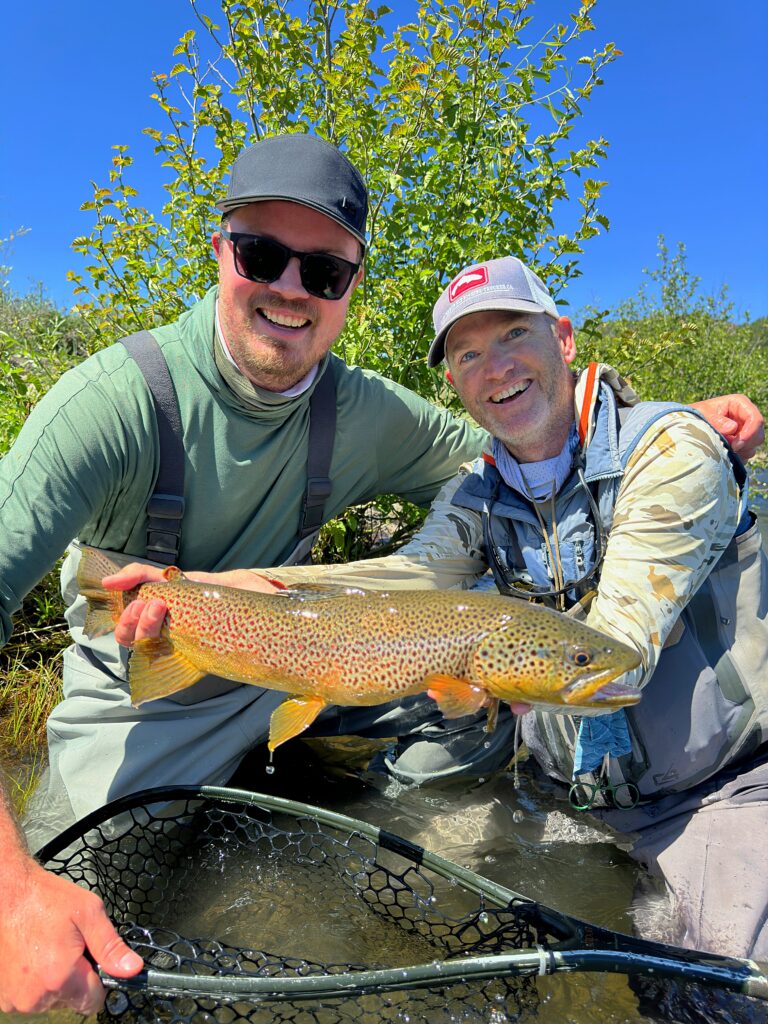
A lucky guest with bigger than average, hopper-dropper brown trout in July!
Fall (September–November): The Sweet Spot for Serious Anglers
If spring is the most consistent all-around season, fall is the season I personally look forward to the most.
Fall is when the Truckee gets quiet again. Pressure drops some, the air cools and water temps stabilize. After what was a hot few months of summer, the fish are happy again and really start to feed.
This season gives you longer “good water temp windows” than summer and more feeding consistency than winter. It’s one of the best times of year to be on the river if you care about quality fish without the summer crowds.
Fall is also a season when the Truckee rewards the angler who can read water. With the right weather, the baetis hatches can be extensive and nymph fishing stays consistent. This can also be prime time for steamer fishing, especially when the weather takes a turn for the worse.
As fall progresses, browns start behaving like predators again. If you’re looking for that true Truckee experience — the kind where you fish hard, hook a couple strong trout, and feel like you earned every inch — fall is hard to beat.
The only real downside is weather volatility late in the season. One cold snap can shift the bite temporarily. But overall, fall is one of the best stretches of the year, and one many visitors overlook.
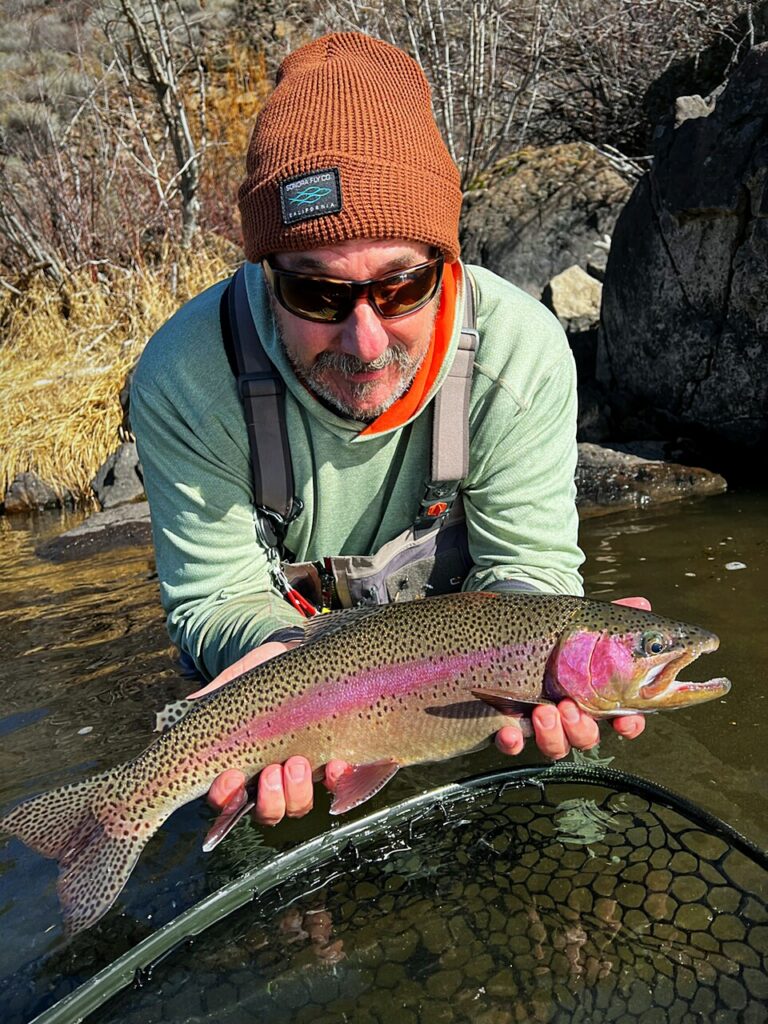
A trophy Truckee River rainbow on a cool, fall day.
So… What’s the Best Season to Fly Fish the Truckee?
It depends on what kind of day you want.
If you’re looking for numbers over size, then I’d look at summer.
If size is more your game, then fall through spring is hard to beat.
Now of course, nothing is set in stone, but these are pretty good rules to go by. Each season has its own pros and cons, but no matter what, any day of the season, you could land a true Truckee giant!
No matter when you come, the Truckee will reward anglers who fish it with patience and respect. It’s a wild trout river after all, and it fishes like one.
If you’re planning a trip and want to shorten the learning curve, our team guides year-round on the Truckee and Little Truckee Rivers. I’ll help you match the season to the right tactics — from winter nymphing and streamer hunting to spring hatches and technical summer dry fly windows.
Click the image below and drop us a note. We’d love to show you around.

Recent Comments